
Project Area
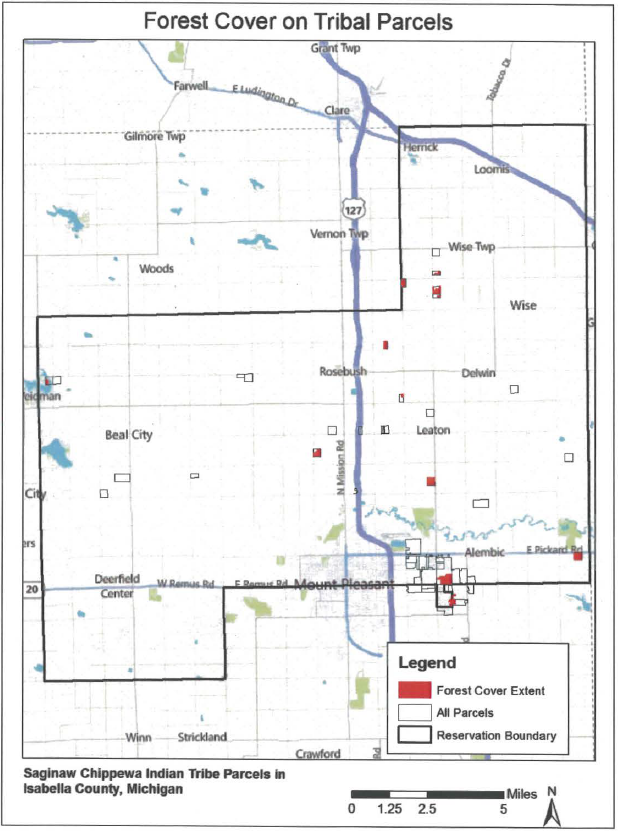
 The Isabella Indian Reservation in central Michigan was established in the mid-1800s. The reservation originally encompassed over 130,000 acres north of Mount Pleasant, MI. These lands were in the heart of the original wave of white pine lumbering, and much of the land base was lost during the late 1800s. Today, the Saginaw Chippewa Indian Tribe owns about 2,700 acres of trust lands across the reservation. About 500 acres are forested, spread among 20+ separate parcels of land.
 The forests on these properties include aspen, bur and white oak, northern hardwoods, and lowland hardwoods. A Forest and Woodland Management Plan describes the intended management of these parcels.
Management Goals
The Saginaw Chippewa tribe's forest management strategy has been mostly passive in recent decades, allowing existing forest stands to mature. Forest on trust lands are generally intended to remain in a natural state and to be managed for stream protection and wildlife habitat. About 20% of the forest land in (72 acres) is in a "Reserved" category to be used primarily for cultural pursuits, including ceremonial, economic, and administrative uses. For the Adaptation Workbook, Saginaw Chippewa staff thought about general goal of increasing tree species diversity, with particular focus on songbirds and mast-producing species for deer, turkey, and grouse. Another general management goal is to increase age-class diversity in forest stands.
Challenges and Opportunities
Challenges
Opportunities
Adaptation Actions
Project participants used the Adaptation Workbook to develop several adaptation actions for this project, including:
4.2. Prioritize and maintain sensitive or at-risk species or communities.
4.3. Establish artificial reserves for at-risk and displaced species.