





Join researchers and forest managers from across the western UP for an interactive workshop focused on key management challenges facing the region’s northern hardwood forests. Learn about new research, share perspectives on applied forest management, and build connections with local land managers and researchers. The workshop will include flash talks from research and managers, guided discussion, and a field tour showcasing ongoing research initiatives at the Ford Center Forest. This one-day event will foster two-way conversations between researchers and land managers to develop a stronger collective understanding of how to care for our local forests.
*4.5 CFE category 1 credits are available for attendees.
Agenda
9:00a ET Doors Open
9:30a Welcome and Introduction
9:40-11:00a Manager Flash Talks
11:00-11:15a Break
11:15-12:30p Research Flash Talks
12:30-1:30p Lunch (provided)
1:30-1:45p Discussion
1:45-3:45p Field Tour
3:45-5:00p ET Social/Networking Hour
Location
Danis Room, Ford Center, Alberta, MI
Address:
21235 Alberta Ave # 2, L'Anse, MI 49946
Field Tour
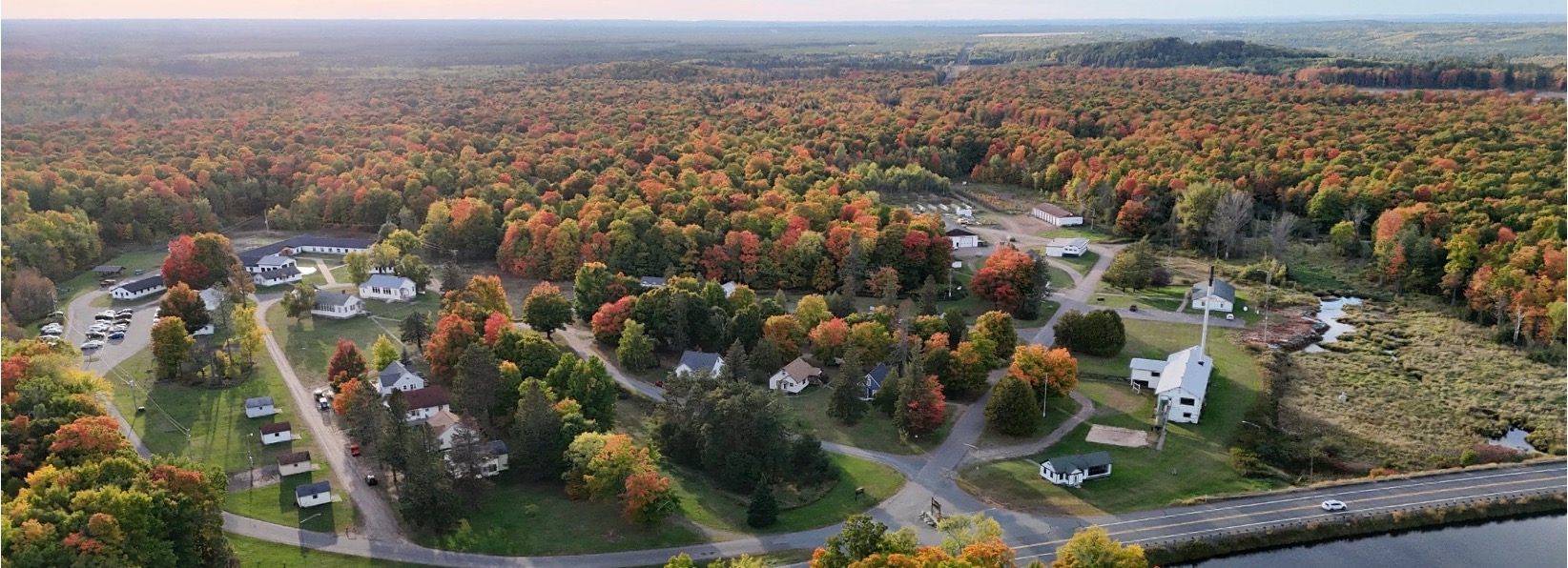
The Adaptive Capacity Through Silviculture (ACTS) experiment is located at the Michigan Technological University's Ford Forest. The objective of this experiment is to evaluate how alternative silvicultural strategies can influence the composition, structure, and associated ecosystem functions and services under a changing climate. Four management treatments—no action, business as usual, resilience, and transition—were established to represent a gradient of climate-change adaptation strategies.
Flash Talks
Tara Bal
Forest Health in Northern Hardwoods: From Forest Change to Management Action
Northern hardwood forests are facing novel and interacting forest health challenges that will shape their future. This talk will highlight how applied research can help detect change and develop management solutions. Examples include long-term investigations of sugar maple decline and earthworm-driven changes in ground-layer communities, as well as new research using northern red oak phenology to refine risk prediction models for oak wilt. These examples demonstrate the importance of combining long-term monitoring with targeted research to support adaptive management and resilient forests.

Julia Burton
Adaptive Capacity Through Silviculture: Managing Risk and Maintaining Ecosystem Services in Northern Hardwood Forests
Abstract: A series of changes in ecological conditions makes the sustainability of business-as-usual silvicultural practices in northern hardwoods less certain. Moreover, historical exploitation and management has degraded the capacity of northern hardwoods to self-organize and continue to provide the full suite of values and services people depend on. The Adaptive Capacity Through Silviculture Experiment (ACTS) seeks to quantify the relative risks and rewards of climate-informed Resilience and Transition strategies designed to increase adaptive capacity through restoration of structural, compositional and functional heterogeneity, and forest assisted migration, respectively, compared to Business-as-Usual and No Action.

Alex Helman
Carbon Stewardship via Improved Resiliency in Northern Hardwood Forests
Abstract: With funds from SFI’s Carbon Stewardship funding program, The Nature Conservancy is implementing a project aimed at enhancing forest carbon storage and resilience across 600+ acres of northern hardwood forest in Baraga County. Management activities including variable density thinning, targeted scarification, and underplanting of long-lived conifers, primarily hemlock and white pine. The project seeks to strike a balance between commercial harvesting and other management actions that can increase resiliency through both legacy retention and the establishment of a new cohort of trees.

Rick Hill
Management in the Middle: Modernizing Hardwood Silviculture in the Zone of Maximum Impact.
Abstract: Management of northern hardwood across the west UP state forests present many challenges. In the Lake Superior watershed, we can reliably regenerate northern hardwood. We must work to improve diversity of the resource as well as providing sustainable yield of forest products. In the southern reaches of the WUP we struggle with degraded systems, high deer populations, and changing moisture regimes. These challenges will take more time, investment, and out of the box thinking to regenerate northern hardwood. In the middle we find our best opportunity for new silvicultural practices making a positive impact regenerating northern hardwood stands.

Christel Kern
Long-term and New Forest Service Research on Sustainable Management of Northern Hardwoods
Abstract: For 100 years, Forest Service Research & Development has been studying approaches to sustain northern hardwoods through management. The research includes long-term growth & yield studies as well as new climate adaptive experiments in northern hardwoods, and research that spans from detailed plots to landscape scale studies. Recent results highlight possible modifications to selection systems and importance of followup treatments for recruitment.

Amber Marchel
Managing Northern Hardwoods Amid Changing Conditions: Balancing Long-Term Objectives with Operational Realities
Abstract: Northern hardwood management in Michigan's Upper Peninsula is becoming increasingly complex as land managers work to balance long-term silvicultural objectives with evolving ecological, economic, and operational realities. This presentation will highlight several key challenges currently facing practitioners, including regeneration concerns, access and infrastructure limitations, fluctuating timber markets, and a shrinking logging workforce, a trend occurring throughout much of the country. Using examples from active forest management, the discussion will explore how these factors influence planning and decision-making on the ground.


Christopher R. Webster
Using Silvicultural Experiments to Identify Bottlenecks and Maintain Species Diversity in Northern Hardwood Forests
Abstract: A variety of silvicultural experiments have been established over the last 20 years at the Ford Forest with the goal of maintaining species diversity in managed forests. This talk will highlight key findings from gap based silviculture experiments and the Northern Hardwood Silviculture Experiment to Enhance Diversity.
